Physical Address
304 North Cardinal St.
Dorchester Center, MA 02124
Physical Address
304 North Cardinal St.
Dorchester Center, MA 02124
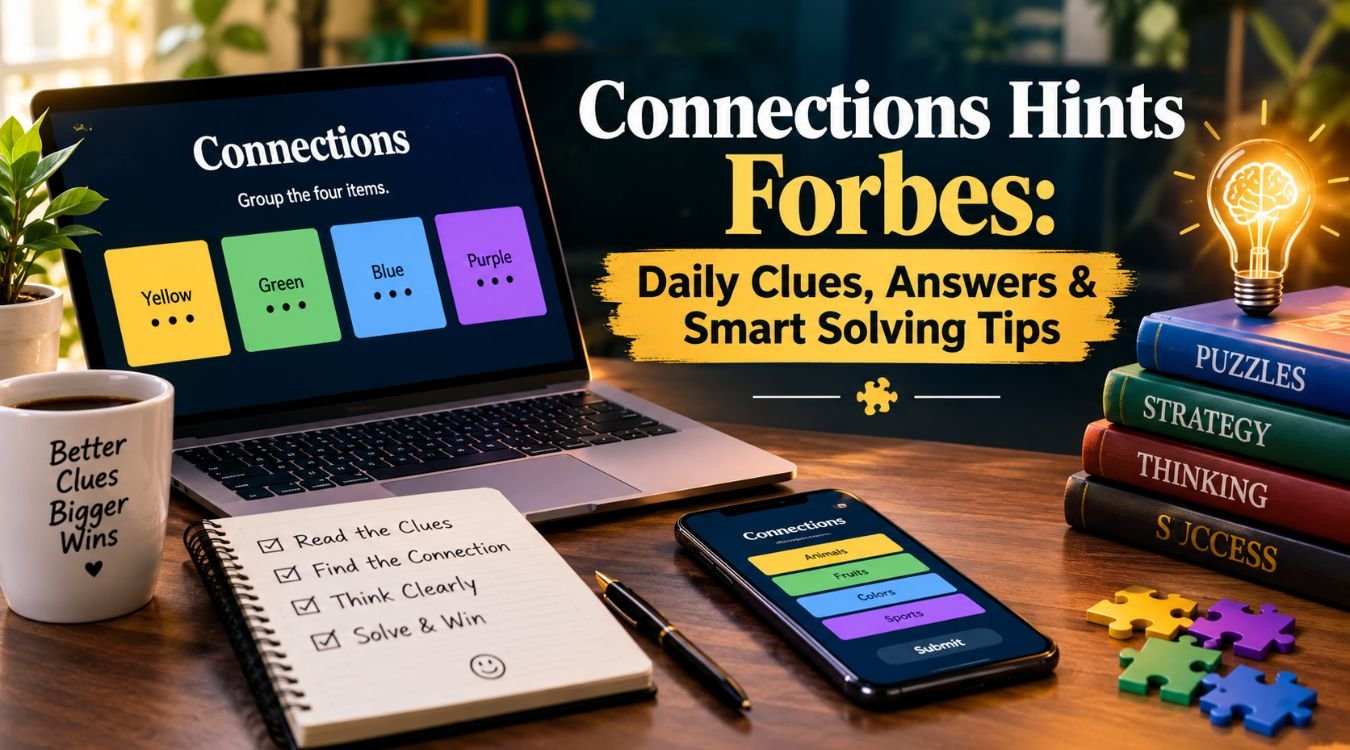
If you’re stuck on the daily Connections puzzle, a small clue can make a huge difference. That’s where connections hints forbes searches come in handy. Many players want just enough help to move forward without seeing the entire solution.
This guide explains how Forbes-related Connections coverage works, how to use hints wisely, and how to solve the puzzle more confidently. You’ll also find practical strategies for spotting word groups, avoiding red herrings, and protecting yourself from unwanted spoilers.
“Connections Forbes” usually refers to Forbes coverage and guides related to the NYT Connections puzzle. It isn’t the official name of a separate game. Instead, players use the phrase when searching for Forbes articles containing daily clues, hints, categories, or answers.
These guides can be especially useful when four words seem connected, but you aren’t sure whether they’re actually meant to form a group. A good hint should help you rethink the board rather than simply give everything away.

NYT Connections is a daily word puzzle from The New York Times. You get a board containing sixteen words, and your goal is to divide them into four groups of four.
Each group has a hidden relationship. That relationship might involve synonyms, phrases, names, objects, pop culture, or something much less obvious.
The four groups are commonly represented by different colors:
The real challenge isn’t finding any relationship. It’s finding the intended relationship while avoiding misleading matches.
Daily players often search for Forbes NYT Connections hint today when they reach a stubborn category. They may understand three words but can’t identify the fourth. A carefully chosen hint can provide the missing direction.
There’s also a practical reason for these searches. Connections changes every day, so yesterday’s solution won’t help much with today’s board. Players looking for NYT Connections hints today usually want assistance for one specific puzzle.
Before looking for a solution, think about how difficult the board feels. Some puzzles have obvious groups, while others contain several words with overlapping meanings.
If you’re dealing with an unusually confusing board, slow down. Don’t burn guesses just because four words appear loosely related. The puzzle often rewards patience more than speed.
Category hints are a good middle ground between solving alone and reading the full answer. They tell you what kind of relationship to look for without necessarily naming every word.
For example, a hint could suggest a type of food, famous names, words that follow another term, or something related to sports. Once you understand the theme, return to the board and try finding the group yourself.
If the hints still aren’t enough, you can check the complete solution. However, it’s worth treating full answers as the final step.
Look closely at why each word belongs in its group. More importantly, notice why the other tempting words don’t belong. That small review can teach you more about Connections than simply seeing the correct answer.
Forbes Connections today searches are popular because daily puzzle players often want quick, organized assistance. They aren’t always looking for a long explanation. Sometimes they simply need one clue to get unstuck.
Another reason is the progressive nature of puzzle guides. Readers can usually stop after a category hint, continue solving, and return only if they need more help. This makes the experience less frustrating while still leaving room for independent thinking.

Forbes-related Connections guides generally follow a spoiler-friendly approach. Readers may first encounter information about the puzzle, followed by clues, category guidance, and eventually the complete answers.
That structure is useful because different players need different amounts of help. Someone might only need a gentle nudge, while another person may have already made several attempts and simply want to verify the solution.
A useful guide may cover:
The smartest way to use a Connections hint Forbes article is to treat it as a backup, not a shortcut. Spend some time studying the sixteen words first. Look for obvious relationships and note any groups that feel especially strong.
Then use the smallest hint that can help. If a broad clue solves the problem, there’s no reason to read the full answer. You still get the satisfaction of making the final connection yourself.
For example, suppose three words clearly seem related. Instead of checking all four answers, look for a category hint. That extra piece of context may be enough to identify the missing word.
Before searching for connections hints forbes, give yourself a few minutes with the original board. Read every entry slowly and consider different meanings. Sometimes the answer becomes obvious after you stop staring at the words as one large group.
Start by marking possible relationships mentally. You might notice four foods, several names, or words that can follow the same phrase. Don’t submit a group immediately, though. Ask whether another word could create a more precise category.
This matters because Connections loves red herrings. A group can look completely convincing and still be wrong.
Progressive hinting keeps the puzzle enjoyable. Start with a category-level clue and see whether it changes how you view the board.
If you’re still stuck, move to a more specific clue. Only check the complete solution when you’ve genuinely run out of ideas.
This approach also helps you identify your weak spots. If a broad hint is enough, you’re probably improving at recognizing patterns. If you constantly need complete answers, spend more time studying the reasoning behind each category.
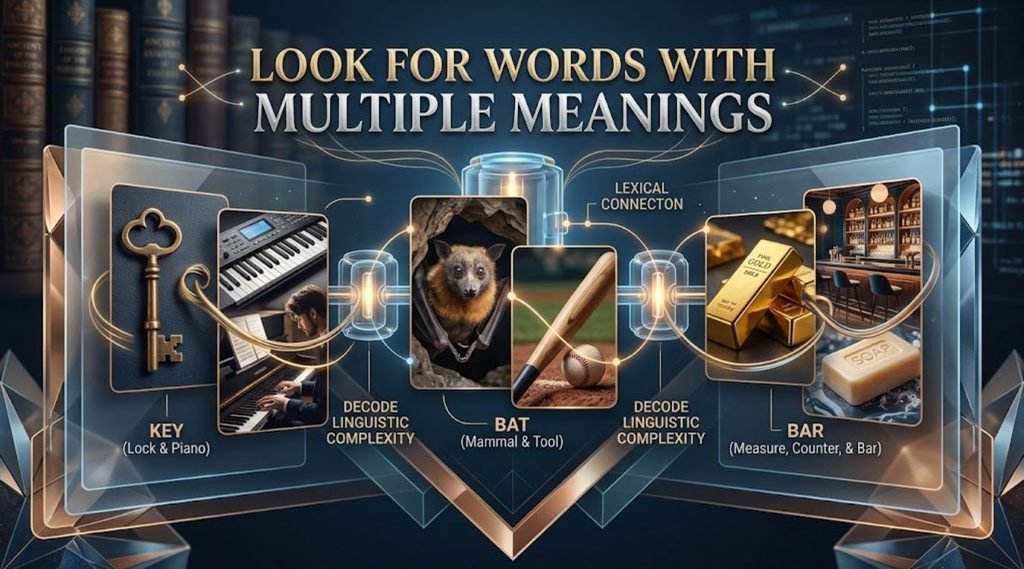
One word can have several identities in Connections. It might be an everyday object in one context and a name, verb, title, or phrase component in another.
For example, a familiar word could belong to a category because it completes a common expression rather than because of its dictionary definition. That’s why you shouldn’t automatically choose the first meaning that comes to mind.
When three words fit beautifully, ask yourself what the fourth word could mean in a different context. That mental shift often reveals the intended group.
Connections categories can cover almost anything. Some are based on everyday vocabulary, while others rely on entertainment, sports, geography, language, or cultural references.
Common themes may include:
You don’t need expert knowledge in every subject. Often, the easier groups provide enough clues to make the remaining categories easier.
Getting faster isn’t about guessing quickly. It’s about reducing unnecessary guesses. A reliable process helps you examine the board without getting trapped by the first connection you notice.
Try scanning the puzzle in several ways. Look for synonyms first, then phrases, names, categories, and unusual word combinations. If one group seems too broad, leave it alone and investigate another possibility.
Look for four entries with a very specific relationship. Strong synonyms or familiar categories are usually better starting points than vague associations.
Once you remove a confirmed group, twelve words remain. The smaller board makes the next category much easier to see.
A connection can be technically true and still be wrong. That’s one of the puzzle’s biggest tricks.
Suppose four words could all describe something related to travel. That doesn’t mean they belong together. One might instead be part of a phrase, while another belongs to a completely different category.
Always search for the most specific relationship.
Don’t skim the board. Pay attention to spelling, capitalization, prefixes, endings, and possible phrases.
A word that looks ordinary might become important when paired with another entry. Sometimes the intended connection isn’t visible until you mentally add another word before or after it.
Some entries aren’t meant to be understood through their everyday definitions. They may refer to people, fictional characters, places, brands, songs, or other proper nouns.
If several words seem oddly capitalized or recognizable as names, consider whether they could form a category. This can reveal a group that isn’t obvious from vocabulary alone.
You don’t have to solve every word immediately. If one entry feels confusing, leave it aside and work with the stronger possibilities.
After removing one or two groups, that difficult word may suddenly become obvious. Sometimes the easiest way to solve a hard word is to solve everything around it first.
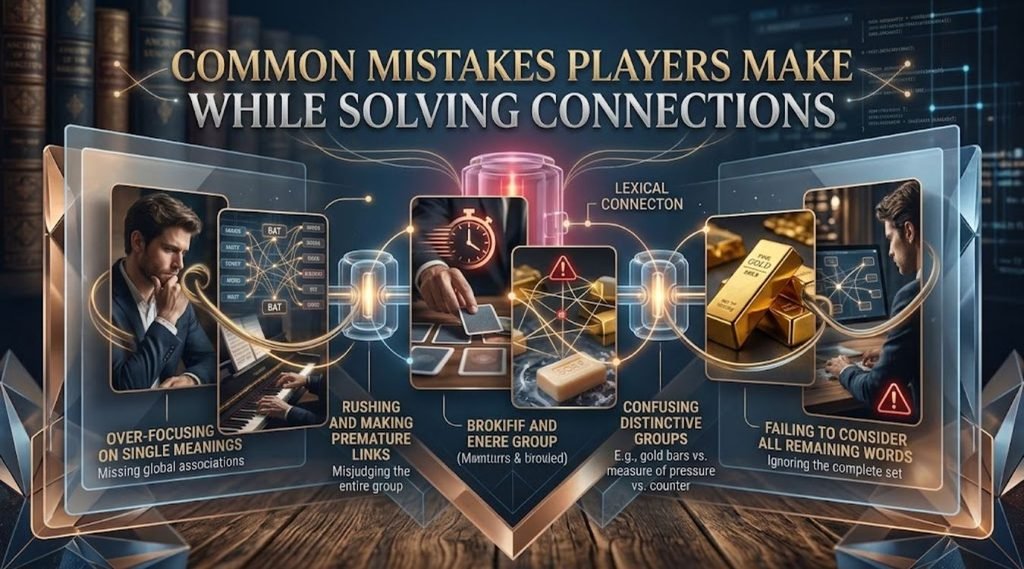
The biggest mistake is assuming that four related words automatically form a correct group. Connections isn’t testing whether you can spot relationships. It’s testing whether you can spot the right relationship.
Another common mistake is guessing too early. Players may see three promising words and force a fourth into the group. That can waste one of the puzzle’s limited mistakes.
Watch for these habits:
A little patience can save a lot of frustration.
Daily word games have become part of many people’s routines. Players solve them during breakfast, lunch breaks, commutes, or quiet evenings. When a puzzle becomes difficult, searching for a hint feels like a natural next step.
Daily Connections hints are especially useful because the puzzle changes every day. Players may also care about maintaining a streak, comparing their results, or understanding a particularly clever category.
A hint doesn’t have to spoil the experience. Used properly, it can simply provide the push you need to keep going.
It can, especially when you study the reasoning behind the answers. Don’t just memorize which four words belong together. Ask what made that group work.
For example, if you missed a phrase-based category, remember that pattern for future puzzles. If you struggled with proper nouns, start paying closer attention to names and titles.
Over time, you’ll become better at recognizing:
The goal isn’t merely to finish one puzzle. It’s to become a better puzzle solver.
Forbes isn’t the only place where players can find help. The official NYT Games experience is the primary destination for playing the puzzle, while other puzzle communities and guides can provide additional discussion or explanations.
Different resources suit different needs. Some focus on quick answers, while others emphasize strategy and reasoning. If you want to preserve the challenge, choose resources that separate hints from complete solutions.
When checking an answer, it’s also smart to compare the explanation with the actual board. A solution makes more sense when you understand the connection behind it.
Your search wording can make a big difference. If you only need help with one category, search for Connections hints without spoilers rather than asking directly for the complete answer.
You can also use a simple three-stage approach:
This gives you control over how much of the puzzle you reveal. It’s a much better experience than accidentally seeing the complete solution before you’ve had a chance to think.
If you want help without ruining the puzzle, look for category-level information first. A broad clue can point your thinking in the right direction while leaving the actual word selection to you.
Try searches related to Forbes Connections hints today, Connections category hints, or Connections hints without spoilers. These phrases generally match the kind of assistance players want before viewing complete answers.
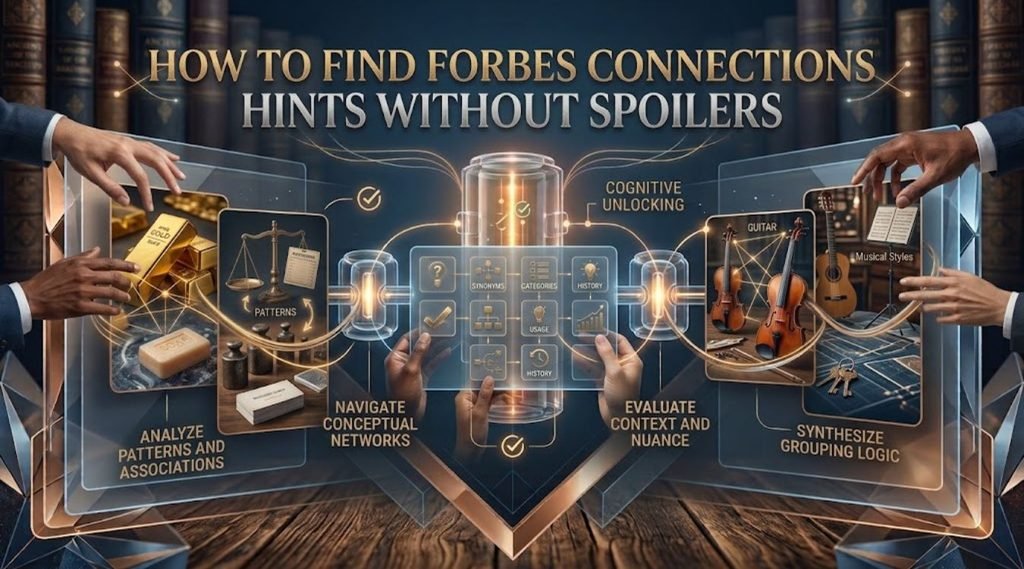
Partial clues work best when you’re close to solving a group. They give you context without removing the reasoning process.
For example, if three entries appear connected, a category clue can tell you whether you’re thinking about the right subject. You can then find the fourth entry yourself.
That small victory matters. Solving the final piece on your own helps reinforce the pattern for future puzzles.
A difficult category usually isn’t difficult because the words are impossible. The challenge comes from ambiguity. Several entries may appear to fit multiple groups at once.
Purple categories often feel especially tricky because they can involve wordplay, obscure references, phrases, or less obvious associations. However, difficulty varies from puzzle to puzzle.
The key is to look for precision. A strong category usually has a clear reason why its four words belong together and why the other twelve don’t.
Words with multiple possible connections are often the puzzle’s biggest traps. One entry might fit a sports group and a phrase group, for example.
When that happens, don’t decide based on one word. Examine the entire set. Ask which arrangement creates the strongest four-word category and leaves sensible groups behind.
This whole-board approach can prevent many unnecessary mistakes.
If you’re checking Forbes Connections today, don’t begin by hunting for the answer. Start with the board itself. Scan all sixteen entries and identify anything that immediately stands out.
Then work from the strongest relationship toward the weakest. Remove confirmed groups and reconsider the remaining words after every successful find.
A simple routine looks like this:
This strategy keeps the puzzle challenging while reducing random guesses.
Before submitting a group, mentally write down the four words and explain their relationship to yourself. If you can’t clearly describe why all four belong together, wait.
Also check the remaining words. If one leftover entry fits your proposed category better, your first idea may be a trap.
That extra few seconds can make a huge difference. Connections rewards careful comparison, not just quick recognition.

Connections hints forbes refers to Forbes-related guides offering clues, categories, strategies, and answers for the daily NYT Connections puzzle.
Search for Forbes Connections coverage using the current puzzle date and look for guides that separate hints from complete answers.
Start with broad category clues, then use more specific hints only when necessary to preserve the solving experience.
The puzzle contains sixteen words that players must organize into four groups containing four related entries each.
Difficult categories often use multiple meanings, wordplay, obscure references, or words that appear to fit several groups.
Yes. Studying why answers belong together can improve vocabulary, word association, pattern recognition, and category spotting over time.
Look specifically for Connections hints without spoilers and reveal category clues before checking complete answers.








[…] registration information may offer additional clues, but it doesn’t always reveal the actual operator. Consider multiple sources rather than […]