Physical Address
304 North Cardinal St.
Dorchester Center, MA 02124
Physical Address
304 North Cardinal St.
Dorchester Center, MA 02124

Have you ever seen GPI Mean in Text and wondered what it means? GPI Meaning in Text is a common question among online users today. This guide explains GPI Mean in Text with simple examples and clear details. The term often appears in chats, comments, and social media posts.
The GPI meaning slang can change based on the situation and tone. Many people search for gpi meaning spanish because it comes from a Spanish phrase. Similar searches include tbd meaning, evb meaning in text, and ash meaning slang when learning new digital words. GPI Mean in Text helps readers understand online conversations better.
Whether you see GPI Mean in Text on TikTok, Instagram, or WhatsApp, context matters most. This GPI Meaning in Text guide shows how people use the phrase in friendly chats and social reactions. It makes slang easier.
GPI means “Gracias Por Invitar” in text, which is a Spanish phrase that translates to “Thanks for inviting me.”
People usually use GPI mean in text as a playful or sarcastic reaction when they feel left out of a plan, party, trip, dinner, or group activity. It does not usually mean a serious thank you. Instead, it often suggests, “You went without inviting me?”
For example:
Friend: “We went for pizza last night.”
Reply: “GPI.”
Here, the person is jokingly saying they wish they had been invited.
The most common answer to what does GPI mean in text is “Gracias Por Invitar.” This short phrase comes from the Spanish language and has become popular as internet slang and texting slang.
In online conversations, GPI works as a social reaction. Someone may type it after seeing a photo, story, or message about an activity they missed. It can show a feeling of being left out, forgotten, or not included.
For example:
A: “We had a beach day yesterday.”
B: “GPI.”
The literal meaning is “Thanks for inviting me,” but the actual meaning depends on the context. In most cases, it is a playful complaint rather than a real thank-you.
You may see GPI on platforms like TikTok, Instagram, Snapchat, WhatsApp, and Facebook. Friends often use it in comments, group chats, and direct messages when they want to tease someone for not including them.
The GPI mean in text can sound funny, sarcastic, or slightly hurt depending on the relationship between the people talking. A close friend might use it as a light joke, while someone who truly feels excluded may use it to express disappointment.
The GPI mean in text usually refers to “Gracias Por Invitar,” a Spanish phrase that means “Thanks for inviting me.” In online conversations, people often use GPI as a playful reaction when they feel left out of a plan or social event.
Unlike a normal thank-you message, GPI often carries a hidden meaning. It can suggest, “I saw your plans, but nobody invited me.” That is why people use it as a sarcastic expression, funny complaint, or friendly tease.
For example:
A: “We went to a restaurant after class.”
B: “GPI 😭”
Here, B is not actually thanking A. They are joking about not being included.
The meaning can change based on the situation. Among friends, GPI usually feels playful and harmless. However, in some conversations, it can show a small feeling of disappointment or being ignored.
You may find GPI in TikTok comments, Instagram stories, WhatsApp groups, Snapchat chats, and other online chat languages. It has become a common example of how digital communication turns longer phrases into short and easy reactions.
GPI is mainly an acronym because each letter represents a word from the Spanish phrase:
Together, Gracias Por Invitar means “Thanks for inviting me.”
It is also a short form because people use three letters instead of typing the complete phrase. This makes it faster for casual communication, especially in social media comments and quick messages.
GPI is considered internet slang and texting slang rather than a formal abbreviation. People usually use it in informal communication, online conversations, and social media culture.
For example:
“Everyone went on a trip without me. GPI.”
The three-letter slang expresses a full reaction without needing a long sentence. It shows how modern digital language often uses short expressions to share emotions quickly.
No, GPI is not a phonetic spelling. A phonetic spelling usually copies the sound of a word or phrase so people can pronounce it easily. For example, some words are written differently online to match their pronunciation.
However, GPI meaning in text does not work that way. It comes from the first letters of the Spanish phrase “Gracias Por Invitar.” Each letter represents a word, so it is an acronym instead of a sound-based spelling.
For example:
GPI = Gracias Por Invitar
Meaning = Thanks for inviting me
Because GPI does not imitate a spoken sound, it is not considered a phonetic spelling or pronunciation shortcut.
Yes, GPI can be considered meme-based slang because people often use it in funny online situations. It became popular through social media culture, internet humor, and comment sections where users make jokes about being left out.
People often write GPI under:
For example:
Friend posts a beach photo:
“Best day ever 🌊”
Comment: “GPI 😭”
The person is not truly angry. They are making a playful complaint about not being invited.
This type of internet slang fits modern meme culture because it turns a small feeling of exclusion into a funny social reaction.
No, GPI is not a random typing variation or spelling mistake. People intentionally use it as a short form to save time while texting.
In today’s fast typing culture, users often replace longer phrases with short abbreviations. GPI works the same way as other digital shorthand terms like IDK, IDC, or ION.
For example:
Instead of typing:
“Thanks for inviting me, but I noticed you went without me.”
Someone may simply write:
“GPI.”
The meaning depends on the context, relationship, and tone. It can sound playful, sarcastic, or slightly hurt depending on the conversation.
The GPI mean in text stays mostly the same across different platforms, but the tone can change depending on where people use it. This social media abbreviation is common in casual communication, online chats, and digital conversations.
People often use GPI when they see friends doing something without them. It can appear in comments, stories, captions, direct messages (DMs), and group chats.
Here is how GPI is used on popular platforms:
| Platform | GPI Usage |
| TikTok | Users often write GPI in TikTok comments when they feel left out of a trend, trip, or activity. |
| People use GPI in Instagram stories, reels, and photo comments as a playful complaint. | |
| Snapchat | GPI may appear as a reaction to Snapchat stories showing parties, dinners, or hangouts. |
| Friends use GPI in WhatsApp groups and private chats when someone misses a plan. | |
| It can appear under Facebook posts, event photos, or family updates. | |
| X (Twitter) | Users may use GPI in short replies or funny reactions. |
| Threads | GPI can appear in casual discussions and social reactions. |
For example:
Friend posts a restaurant visit:
“Best pizza night 🍕”
Reply: “GPI.”
The person usually means, “Thanks for inviting me,” but they are joking about not being included.
The GPI meaning on Snapchat, GPI meaning on TikTok, GPI meaning on Instagram, and GPI meaning on WhatsApp all depend on the relationship between the people. Among close friends, it is usually a light joke. In other situations, it may show disappointment or a feeling of being forgotten.
Although GPI is only three letters, its meaning can change a lot. The same message can sound funny, sarcastic, playful, flirty, or serious depending on the emotional context.
The GPI slang meaning is not only about the words. It also depends on the situation, the person using it, and the relationship between both sides.
Friends often use GPI as a funny reaction. It turns a small complaint into a joke.
Example:
A: “We ordered pizza after class.”
B: “GPI. I would have joined.”
Here, the person is not actually upset. They are making a light joke.
GPI is commonly used as a sarcastic expression when someone feels left out.
Example:
A: “Our weekend trip was amazing.”
B: “Wow, GPI.”
The person means, “Nice trip. I guess nobody invited me.”
In friend groups, GPI can show friendly teasing. It helps people joke about social plans without creating a serious problem.
Example:
A: “We went for coffee yesterday.”
B: “GPI next time.”
This sounds like a friendly reminder rather than anger.
Sometimes GPI can show real feelings of exclusion. If someone expected an invitation and did not receive one, the phrase may carry disappointment.
Example:
A: “Everyone met yesterday.”
B: “GPI.”
In this situation, the person may actually feel ignored.
GPI can also appear in relationship conversations. Someone may use it playfully when teasing a person they like.
Example:
A: “I visited your favorite cafe.”
B: “GPI? You went without me?”
Here, it creates a playful or flirty reaction.
The meaning of GPI always depends on context. A simple three-letter phrase can show humor, friendship, teasing, or even a small feeling of being left out.
The best way to understand GPI mean in text is by looking at real chat situations. People usually use GPI when they see friends, family members, or classmates enjoying something without them.
Here are some common GPI text examples:
A: We went for dinner last night.
B: GPI.
A: You were busy, but next time you’re coming.
Here, B is joking about not being invited.
A: Posts a story from a coffee shop.
B: Looks fun. GPI ☕
A: Next coffee plan is with you.
The reply shows a playful complaint.
A: POV: Your friends went on a trip without you.
B: GPI 😭
The comment uses GPI as internet humor.
A: We ordered burgers for everyone.
B: GPI, I wanted food too.
A: My bad, we’ll save some next time.
In group chats, GPI often feels friendly and casual.
A: The birthday dinner was amazing.
B: GPI.
A: Sorry, we thought you were out of town.
Here, the person may feel slightly left out.
A: We went to the beach yesterday.
B: GPI, I love beach days.
A: Next time, you’re invited.
This shows a light and friendly reaction.
A: We visited grandma today.
B: GPI, nobody told me.
A: Sorry, it was a quick plan.
In family conversations, GPI can show surprise or disappointment.
A: I watched that movie you like.
B: GPI, that was supposed to be our movie.
A: We can watch another one together.
Here, GPI creates a playful romantic tone.
These examples show that GPI is a reaction phrase rather than a normal sentence. The meaning changes based on the situation, tone, and relationship between people.
Although GPI looks simple, it has an interesting role in modern digital language. It works differently from traditional words because people mainly use it in online conversations and casual communication.
GPI is a short reaction instead of a complete sentence. It helps users express feelings quickly without typing a long message.
For example:
Full sentence:
“Thanks for inviting me, but I noticed you went without me.”
Short version:
“GPI.”
The short form carries the same emotional idea in a faster way.
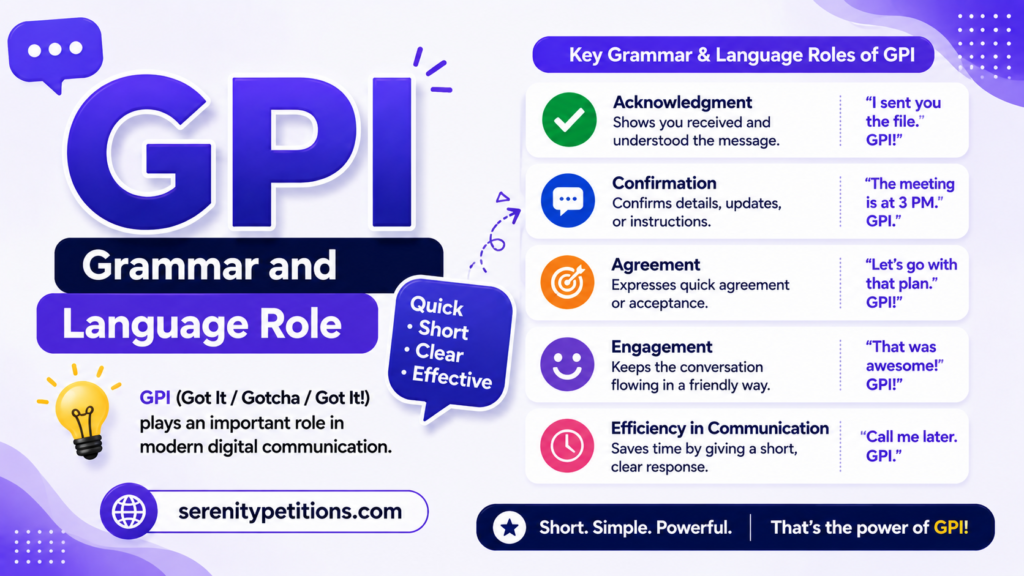
GPI works like an interjection or reaction phrase. It does not usually act as a noun, verb, or adjective.
Examples:
It expresses a feeling or response instead of describing an action.
In a sentence, GPI can work as:
Example:
“GPI next time.”
This means:
“Invite me next time.”
The literal meaning of GPI is “Thanks for inviting me.” However, the figurative meaning is often the opposite.
It may mean:
That difference makes GPI an interesting example of how slang changes meaning online.
GPI belongs to informal communication. People use it with friends, classmates, family members, and online communities.
Avoid using GPI in:
Since it is a slang term, it works best in casual conversations where people understand the joke.
When someone says GPI, your reply depends on the tone behind the message. The person might be joking, teasing, or actually feeling left out. Before responding, consider the relationship and the situation.
If a friend uses GPI after seeing your party photo, food post, or weekend plan, a funny reply usually works well. However, if they sound disappointed, a more caring response is better.
Here are some common GPI replies:
Use these when the conversation has a playful mood:
These work well in normal friend conversations:
If someone seems genuinely hurt, avoid joking too much. Try a simple apology instead:
In a romantic or playful conversation, GPI can create a fun moment:
If you are unsure what the person means, keep it simple:
A good reply depends on the emotional context. GPI may look like a simple slang word, but it can express humor, friendship, disappointment, or even a small feeling of exclusion.
No, GPI is not a bad word. It is a casual internet slang term that people use in online conversations. The phrase does not contain offensive language or harmful meaning.
However, the tone can change how it sounds. A close friend saying “GPI 😂” is usually just teasing. Someone using “GPI” in a serious situation may actually feel ignored or left out.
GPI is not automatically rude. In most cases, it is a playful complaint between friends.
For example:
“GPI, you went for pizza without me?”
This usually sounds like friendly teasing.
But if someone writes:
“Wow. GPI.”
The message may sound more serious or passive-aggressive depending on the situation.
Usually, GPI is not disrespectful. It is often used as a social reaction when someone notices they were not included.
Still, using it repeatedly or publicly to embarrass someone can make the conversation uncomfortable.
No. GPI is not a bad word. It is simply a three-letter slang term used in digital communication.
It is common in:
GPI works best in informal conversations. Avoid using it in formal communication like:
In those situations, a clear sentence works better. For example:
Instead of saying:
“GPI.”
You could write:
“I would appreciate being included next time.”
The meaning of GPI depends on the people involved and the situation. With the right audience, it is a funny and harmless way to express a reaction.
GPI is mostly used by people who spend time on social media, online communities, and casual chat platforms. It is popular among users who understand Spanish slang, internet slang, and modern texting habits.
You will often see GPI in conversations between friends, classmates, family members, and online followers. People use it when they want to joke about not being invited to a plan or activity.
Common users of GPI include:
GPI is especially common among people from Spanish-speaking regions like:
However, you do not need to speak Spanish to see or use GPI. Because of social media culture, many English-speaking users also recognize the phrase.
Gen Z users often use GPI in TikTok comments, Instagram replies, memes, and casual messages. They usually enjoy short expressions that quickly show emotions.
Millennials may also understand GPI, especially if they follow Spanish content or use platforms like Facebook, Instagram, and WhatsApp.
Older users may not recognize GPI immediately because it comes from modern online communication rather than traditional language.
You are most likely to find GPI in:
People usually use it when talking about parties, trips, dinner plans, vacations, food posts, birthdays, or friend hangouts.
The origin of GPI comes from the Spanish phrase “Gracias Por Invitar,” which literally means “Thanks for inviting me.” Over time, people changed the phrase into a short online expression that carries a more playful meaning.
In everyday Spanish, the phrase sounds polite. However, in internet conversations, GPI often becomes a sarcastic reaction when someone feels left out.
For example:
Friend posts a vacation photo:
“Best trip ever!”
Comment: “GPI 😭”
The person is not seriously saying thank you. They are jokingly saying, “You went without inviting me.”
This change from literal meaning to social meaning is common in online slang. Digital communication often turns normal phrases into funny reactions.
GPI became popular because it is:
Instead of writing a long message like:
“Looks like everyone had fun, but I was not invited.”
People can simply write:
“GPI.”
Three letters can express the same feeling quickly.
GPI fits well with meme culture because it turns a small feeling of exclusion into humor. People use it under posts about:
The joke works because many people understand the feeling of seeing friends enjoy something without them.
Platforms like TikTok helped GPI spread because short phrases perform well in fast online conversations. Users often repeat catchy slang terms in videos, captions, and comment sections.
Like other viral texting terms, GPI became popular because it is quick, memorable, and easy to add to a conversation.
Modern digital communication encourages shorter messages. People use abbreviations to save time while still showing emotions.
GPI turns a full thought into a simple reaction:
“I noticed you had fun without me, and I’m jokingly complaining.”
That is why GPI continues to appear in online conversations, especially among younger social media users.
GPI is one of many short internet expressions people use in online conversations. Comparing it with other popular text abbreviations helps you understand how its meaning and tone are different.
| Term | Meaning | Type | Tone | Common Usage |
| GPI | Gracias Por Invitar (Thanks for inviting me) | Spanish internet slang | Playful, sarcastic, sometimes hurt | Used when someone feels left out |
| IDK | I Don’t Know | Text abbreviation | Neutral or unsure | Used when someone does not have an answer |
| ION | I Don’t | Internet abbreviation | Casual | Used in quick online messages |
| Dunno | Don’t Know | Informal expression | Relaxed | Used in everyday chats |
| IDC | I Don’t Care | Text slang | Blunt or dismissive | Used to show a lack of interest |
Unlike IDK, IDC, or ION, GPI focuses on social situations. It usually connects to invitations, group activities, and feelings of inclusion or exclusion.
For example:
The biggest difference is that GPI carries an emotional meaning. It is not just information. It often shows humor, teasing, or a small feeling of disappointment.
In real online conversations, people usually use GPI after seeing something they were not part of. It often appears under photos, stories, and updates about social plans.
For example, someone might see friends posting a dinner photo and comment:
“GPI 😭”
Most of the time, they are not truly angry. They are joking about missing the event.
However, the feeling behind GPI depends on the relationship. A close friend may use it as friendly teasing, while someone who expected an invitation may use it to show real disappointment.
GPI works best when everyone understands the joke. The safest response is usually simple and friendly:
Understanding the context matters more than the phrase itself. Like many online slang terms, GPI can have different meanings depending on the people, situation, and tone of the conversation.
Although GPI meaning in text looks simple, many people misunderstand how and when to use it. Since GPI is a form of internet slang and digital language, its meaning depends heavily on the situation and the relationship between people.
Here are some common mistakes people make with GPI:
Many users assume that GPI always shows real disappointment. However, friends often use it as a funny reaction or playful complaint.
Example:
Friend: “We went for coffee yesterday.”
Reply: “GPI 😂”
In this case, the person is probably joking, not actually upset.
The literal meaning of GPI is “Thanks for inviting me,” but the online meaning is often different.
Someone saying GPI may actually mean:
Understanding the context helps avoid confusion.
GPI belongs to informal communication. It works well in social media comments, group chats, and casual conversations.
Avoid using it in:
A person who does not know the slang may misunderstand your message.
Not everyone understands Spanish slang or viral texting terms. Some people may not know that GPI comes from Gracias Por Invitar.
If someone asks what GPI means, explain it instead of assuming they understand.
GPI is usually playful, but repeating it or using it in a public comment can make someone feel blamed.
For example:
“GPI. Everyone always forgets me.”
This sounds more serious than a simple joke.
Use GPI with people who understand your tone and humor.
You should use GPI when the conversation is casual and the other person understands the joke. It works best when you want to show a playful reaction to being left out.
Good situations for using GPI include:
For example:
Friend: “We went for pizza last night.”
Reply: “GPI 🍕”
This sounds like a friendly way of saying, “You should have invited me.”
GPI also works well for:
However, the relationship matters. If you and the person often joke with each other, GPI feels natural. If you barely know them, it may sound confusing or passive-aggressive.
The best time to use GPI is when you want to add humor, show friendly teasing, or remind friends to include you next time. It should feel like a smile behind the words, not a serious complaint.
Although GPI mean in text is usually playful, there are situations where you should avoid using it. Since GPI is an informal phrase and a type of online slang, it may not work well in every conversation.
You should avoid using GPI in:
For example:
Not suitable:
“GPI” in a professional group chat after a meeting.
Better:
“I would appreciate being included in future discussions.”
GPI works best in casual conversations where humor is already part of the relationship. Use it with friends, classmates, or people who understand your style of communication.
A simple rule is: if the situation needs clarity and respect, use a full sentence instead of slang.
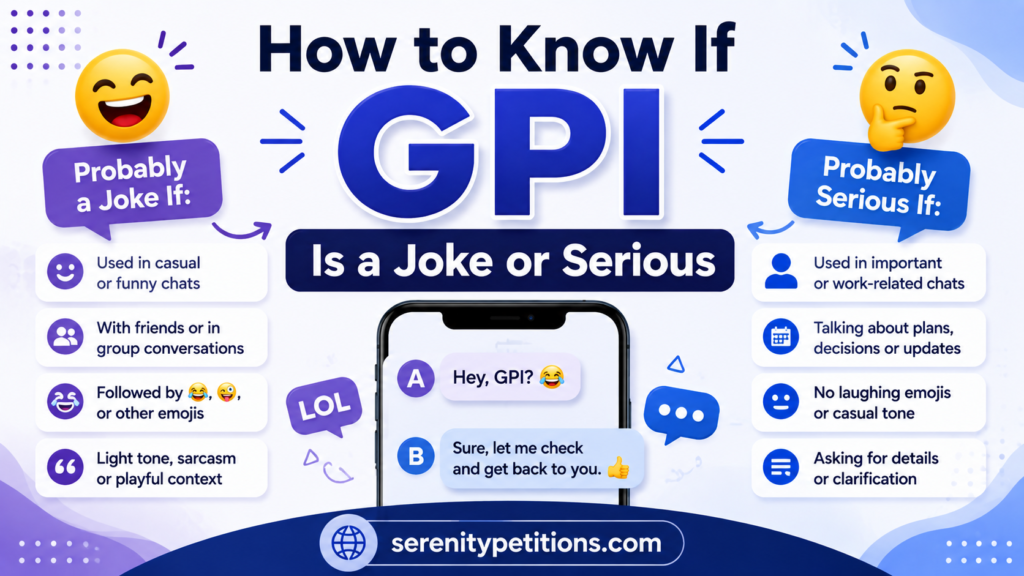
The meaning of GPI depends on the tone, context, and relationship between the people involved. The same three letters can feel funny in one conversation and serious in another.
Here are some signs that GPI is probably a joke:
Example:
A: “We went for pizza without you.”
B: “GPI 😭 Save me a slice next time.”
This sounds playful.
However, GPI may be serious when:
Example:
A: “Everyone knew about the family dinner except me.”
B: “GPI.”
Here, the person may actually feel hurt.
You can also look at what comes before and after the message. A simple “GPI lol” usually shows humor, while “GPI.” may sound more serious.
The best way to understand GPI is to focus on the full conversation, not just the abbreviation. Online slang often carries hidden emotions, and context reveals the real meaning.
GPI Mean in Text stands for Gracias Por Invitar, a Spanish phrase meaning Thanks for inviting me. It is often used playfully online.
No, GPI meaning in text usually shows sarcasm or humor when someone feels left out of plans or events.
People use GPI mean in text on TikTok, Instagram, Snapchat, WhatsApp, Facebook, and other social media platforms.
People use GPI meaning in text as a playful complaint when friends go somewhere without inviting them.
GPI mean in text is not rude by itself. However, its tone can sound sarcastic, funny, or slightly hurt.
A good GPI meaning in text reply can be Next time you are invited, My bad, or Sorry about that.
No, GPI mean in text is informal slang. Avoid using it in work emails, academic writing, or professional communication.
GPI Mean in Text is a simple way to express a playful complaint online. It usually means Gracias Por Invitar, which comes from the GPI meaning Spanish phrase. The GPI Mean in Text usage depends on the situation and the person’s tone.
Understanding GPI Mean in Text helps you follow modern internet slang. The GPI meaning slang shows how people use short words to share feelings quickly. Other terms like tbd meaning, EVB meaning in text, and ash meaning slang also show how digital language keeps changing.
Overall, GPI Mean in Text is mostly friendly and funny. It can show humor, teasing, or feeling left out. Use it in casual chats, but avoid it in formal conversations. Knowing the context makes online communication easier.