Physical Address
304 North Cardinal St.
Dorchester Center, MA 02124
Physical Address
304 North Cardinal St.
Dorchester Center, MA 02124

Have you ever seen TBD Mean in Text and wondered what it means? TBD Mean is a common question in online chats today. This guide explains TBD meaning in simple words. TBD Mean in Text helps you understand this short form used in messages and digital communication.
People use TBD Mean in Text when details are not final yet. It can show pending plans, dates, or decisions. You may also see terms like GPI meaning slang, EVB meaning in text, GPI meaning spanish, and ash meaning slang while learning internet language. These phrases are part of modern online conversations and texting culture.
This article breaks down TBD Mean in Text with clear examples and easy explanations. You will learn how people use TBD Mean on different platforms and why this abbreviation matters in everyday chats too.
TBD Mean in Text refers to “To Be Determined” or “To Be Decided.” People use this abbreviation when a detail, plan, or decision is not confirmed yet. It usually shows that something is still pending and will receive a final update later.
For example:
A: “What time is the meeting?”
B: “Time is TBD. I’ll confirm soon.”
Here, TBD means the meeting time has not been decided yet. You can see this short form in text messages, online chat, work updates, school schedules, and social media conversations.
Simple meaning: TBD = The information is not finalized yet.
The TBD Mean in Text usually describes unknown information, pending decisions, or unfinished plans. It tells the reader that a specific detail still needs confirmation.
People commonly use TBD for:
TBD works as a quick status label in digital communication. Instead of writing “we have not decided this yet,” people use this short form to save time.
You may notice TBD in casual communication, professional messages, school projects, event details, and online conversations. It helps people understand that information is coming later but is not ready at the moment.
TBD Mean in Text is not exactly internet slang. It is an abbreviation and initialism that stands for “To Be Determined” or “To Be Decided.” Each letter represents a word:
People usually pronounce it as “T-B-D” instead of saying the full phrase. Unlike common Internet Slang terms like IDK, IDC, or ION, TBD has a more practical purpose. It appears in both casual communication and formal communication.
You can find TBD in schedules, business communication, school projects, event details, and online conversations. For example, a company may write “Release Date: TBD” when the launch date is still waiting for final confirmation.
In chat messages, TBD Mean in Text shows that information is not finalized yet. People use it when they have unknown information, pending details, or an undecided plan.
For example:
A: “Where are we meeting tonight?”
B: “Location is TBD.”
A: “Okay, keep me updated.”
Here, TBD means the meeting place has not been confirmed. The person expects to share the final details later.
In online chat language, TBD can appear as a complete reply or inside a sentence:
This short form helps people communicate quickly. It works well in text messages, SMS language, WhatsApp groups, and social media conversations where users want to save time while showing that an update is coming soon.
The TBD Mean in Text stays the same across different platforms, but people use it in different situations. This short form appears in digital communication, online conversations, and social media slang when information is not confirmed yet.
Whether you see TBD on Snapchat, TikTok, Instagram, WhatsApp, or SMS, it usually means a detail is still pending. The exact meaning depends on the conversation.
Common examples include:
For example:
A: “When is the trip?”
B: “Date TBD. We are waiting for everyone’s approval.”
Here, TBD shows that the travel date is not finalized yet. It does not mean the trip is cancelled. It only means the final decision is still pending.
Although TBD Mean in Text is usually neutral, the tone can change depending on the situation. The same abbreviation may sound funny, serious, playful, or even slightly frustrating based on the conversation.
In most cases, TBD has a neutral tone. People use it to share unconfirmed details without adding extra emotion.
Example:
“The meeting time is TBD.”
This simply means the meeting time has not been decided.
People often use TBD in jokes or social media humor. It can make everyday choices sound like official decisions.
Example:
“My weekend productivity level: TBD.”
Sometimes users use TBD sarcastically when they already expect something to happen.
Example:
“Will I finish my homework early? TBD.”
In personal chats, TBD can appear in playful or romantic conversations.
Example:
“Our next date is TBD, but I’m already excited.”
TBD may sound frustrating when someone needs a clear answer but receives no update.
Example:
“The payment date is still TBD. I’m waiting for approval.”
In serious situations, adding more details creates better communication. Instead of only writing “TBD,” a clearer message would be: “The final date is TBD. I’ll confirm before Friday.”
The TBD Mean in Text becomes easier to understand when you see how people use it in real conversations. From casual chats to professional messages, TBD helps show that a detail is still waiting for confirmation.
A: “Are we going out this Saturday?”
B: “Plans are TBD. We need everyone’s schedule first.”
A: “Okay, keep me updated.”
A: “Where is the birthday party?”
B: “Location TBD. We will share it soon.”
A: “Got it.”
A: “Who will present the project?”
B: “Team members are TBD.”
A: “Let’s decide before class.”
A: “When is the client calling?”
B: “Meeting time TBD. The client hasn’t confirmed it yet.”
A: “Please update me today.”
A: “Which city are you visiting next?”
B: “Destination TBD. I’m still comparing options.”
A: “Sounds exciting.”
A: “What are we eating tonight?”
B: “Dinner choice is TBD.”
A: “Let’s vote in the group.”
A: “Who is joining the tournament?”
B: “Final team members are TBD.”
A: “Add me if there is space.”
A: “When will you upload the next video?”
B: “Release date TBD. I’m still editing.”
A: “I’ll wait.”
A: “Who is hosting the family dinner?”
B: “It’s TBD. Everyone is discussing it.”
A: “Let me know when it’s confirmed.”
A: “When will the new version launch?”
B: “Launch date TBD.”
A: “Thanks for the update.”
These examples show that TBD works in different situations, including school communication, business messages, social media updates, and personal conversations. It simply tells others that the final information is not ready yet.
The TBD Mean in Text is connected to grammar because it works as a short status phrase instead of a complete sentence. It replaces longer phrases like “has not been decided yet” or “waiting for confirmation.”
TBD is an initialism and abbreviation, not a traditional word. Each letter represents part of the original phrase:
In written communication, TBD acts like a label that shows the current decision status.
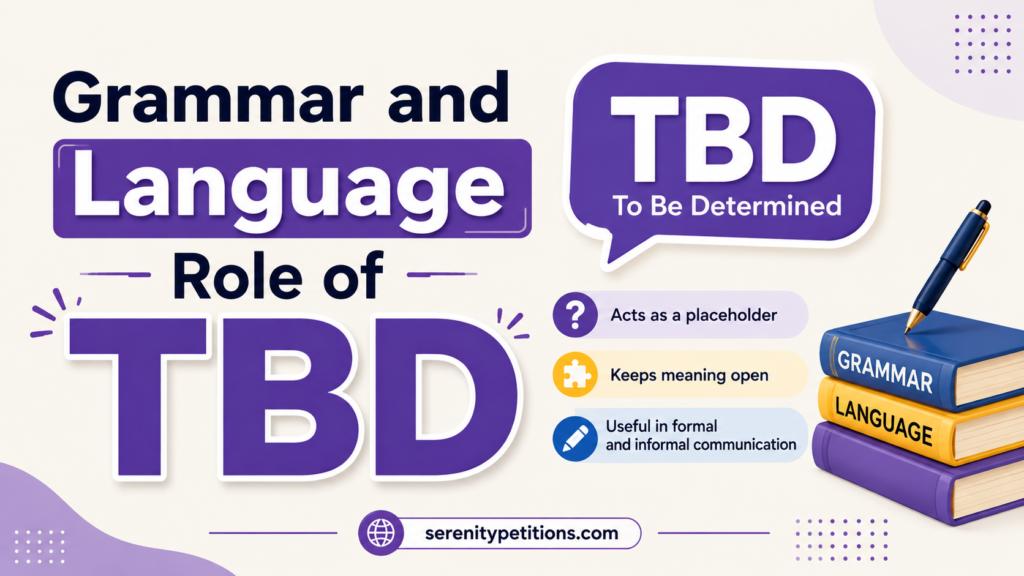
TBD does not have a normal part of speech like a noun, verb, or adjective. However, it can perform different roles in a sentence.
Examples:
As a status label:
“Meeting Time: TBD.”
As a sentence complement:
“The final price is TBD.”
As a complete reply:
“Q: When will you confirm?”
“A: TBD.”
Yes, TBD can replace a longer sentence when the meaning is already clear. For example:
“The date is TBD.”
means:
“The date has not been decided yet.”
However, in professional messages or important updates, adding more details creates clearer communication.
Example:
Instead of:
“Delivery date: TBD.”
Write:
“Delivery date is TBD. We are waiting for supplier confirmation.”
This makes the message easier to understand and avoids confusion.
When someone says TBD in text, the best reply depends on the conversation context. Since TBD means To Be Determined or To Be Decided, the person usually does not have the final details yet.
For casual conversations, you can keep your reply simple:
Example:
A: “The party location is TBD.”
B: “Okay, let me know when it’s confirmed.”
For serious situations, especially work or school communication, ask for a clear update:
Example:
A: “The client meeting time is TBD.”
B: “Please confirm the meeting time once you receive approval.”
You can also use funny or playful responses with friends:
The right reply depends on the message tone, urgency, and relationship with the person.
The TBD Mean in Text is not rude, disrespectful, or negative. It is a neutral abbreviation used to show that information is still pending. People use it in casual communication, professional messages, school schedules, and online conversations.
However, TBD can sometimes feel unclear or frustrating if someone needs an immediate answer. A single “TBD” reply without any explanation may seem like the person is avoiding responsibility or delaying a decision.
For example:
Less helpful:
“The payment date is TBD.”
Better:
“The payment date is TBD because we are waiting for approval. I’ll update you tomorrow.”
Adding a reason and expected timeline makes communication clearer.
TBD is completely acceptable when used for:
However, avoid using only “TBD” in urgent situations, final contracts, safety instructions, or important customer messages. Clear communication always works better when people need a definite answer.
The TBD Mean in Text is widely understood by many groups because it works in both casual and professional communication. Teenagers, students, creators, parents, and professionals all use TBD when information is not finalized yet.
Students often use TBD in school group chats, project plans, presentation notes, and assignment drafts. For example, a student may write “Presentation Topic: TBD” while waiting for the teacher’s confirmation.
Professionals use TBD in business communication, work calendars, meeting agendas, reports, and internal notes. A company may write “Launch Date: TBD” when a product timeline is still waiting for approval.
Creators also use TBD on social platforms like Snapchat, TikTok, and Instagram. They may use it for upcoming videos, content updates, or future plans. Gen Z often includes TBD in social media captions and jokes because it feels quick and relatable.
People across the United States, United Kingdom, Canada, Australia, and other global English communities use TBD regularly. Its simple meaning makes it easy to understand in different conversations.
TBD started as a practical abbreviation for “To Be Determined” and “To Be Decided.” It was not created as modern internet slang, but digital communication helped it become more common.
Before social media became popular, people already used TBD in schedules, documents, event planning, and business updates. Later, fast typing culture and online trends made it a common part of texting abbreviations and internet language.
Today, people use TBD in a more creative way too. Social media users often turn it into jokes, meme captions, and humorous updates.
Examples:
These jokes work because TBD makes ordinary uncertainty sound like an official decision status. This small abbreviation became part of online communities and modern digital slang evolution while still keeping its original meaning.
The TBD Mean in Text can sometimes confuse people because it looks similar to other texting abbreviations. However, each term has a different meaning and purpose. Understanding these differences helps you use the right phrase in online conversations.
| Term | Full Form | Meaning | Common Use |
| TBD | To Be Determined / To Be Decided | Information is not finalized yet | Dates, times, plans, decisions |
| TBA | To Be Announced | Information is decided but not shared yet | Announcements, events, updates |
| IDK | I Don’t Know | The person does not have the answer | Casual chats and questions |
| IDC | I Don’t Care | The person has no interest or preference | Informal conversations |
| ION | I Don’t | A short slang form used in some online chats | Internet slang |
| Dunno | Don’t Know | A casual way to say “I don’t know” | Friendly conversations |
The biggest difference is that TBD refers to a decision or detail that is still pending, while IDK means the person simply does not know something.
For example:
Question: “When is the event?”
Answer 1: “TBD.”
→ The date is not decided yet.
Answer 2: “IDK.”
→ The person does not know the date.
Also, do not confuse TBD with TBA. TBD means the information still needs to be decided, while TBA means the information already exists but will be announced later.
In real conversations, TBD Mean in Text usually appears when a person is waiting for confirmation, approval, availability, or more details. It often connects with situations where multiple people need to make a choice.
For example, a group may discuss a trip:
A: “When are we leaving?”
B: “Departure time is TBD. We need everyone’s schedule.”
Here, TBD does not mean the trip is cancelled. It only means the final timing is still open.
You will often see TBD in:
TBD works best when the missing information is clear and a future update is expected. A helpful message adds extra details, such as:
“Meeting time is TBD. I’ll confirm after the client replies.”
This makes the conversation smoother and avoids confusion.
The TBD Mean in Text is simple, but people sometimes use it incorrectly. These mistakes can create confusion in online conversations, work messages, and everyday communication.
Here are some common mistakes people make:
For better communication, add more information:
Instead of:
“Date TBD.”
Write:
“The event date is TBD. We will confirm it after approval.”
This small change makes the message clearer and more helpful.
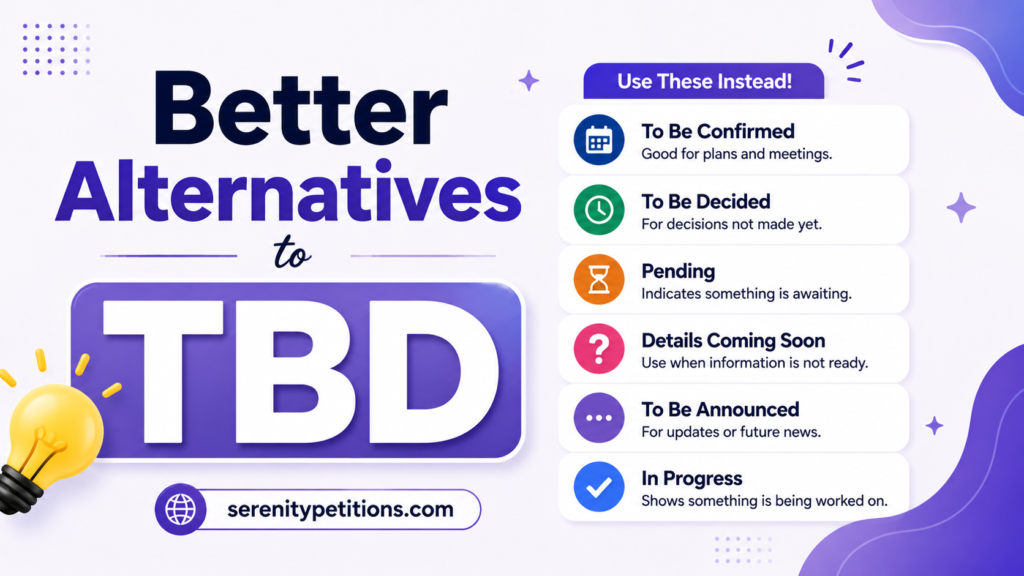
Although TBD Mean in Text is useful, sometimes a complete phrase works better. Clear wording helps people understand what is happening and when they should expect an update.
Here are some better alternatives:
For example:
Less clear:
“Meeting time: TBD.”
More helpful:
“Meeting time is still pending. I’ll confirm once the client replies.”
TBD works well for quick notes, calendars, and casual chats. However, in professional messages, reports, contracts, or important updates, a complete sentence often creates clearer communication.
TBD stands for To Be Determined or To Be Decided. It shows that details are not finalized yet.
No, TBD is not typical slang. The TBD Mean in Text comes from an abbreviation used in digital and formal communication.
People use it in text messages, schedules, work updates, school projects, and social media posts for pending details.
No, TBD does not mean cancelled. The TBD Mean in Text shows plans or information are still waiting for confirmation.
You can reply with simple messages like keep me updated, okay, or let me know after final confirmation.
Yes, businesses use TBD in calendars, reports, meetings, and documents when specific information is still undecided or pending.
TBD Mean in Text a decision is not made yet, while TBA means the information is decided but will be announced later.
Understanding TBD Mean in Text helps you follow modern online communication easily. The TBD Mean shows that a detail is not decided yet. The tbd meaning is simple because it tells people that information is still pending.
The TBD Mean in Text is useful in chats, work updates, and social media posts. While learning texting terms, you may also see phrases like GPI meaning slang, EVB meaning in text, GPI meaning Spanish, and ash meaning slang. These terms are part of changing internet language.
In short, TBD Mean in Text means waiting for final details. It keeps messages short and clear. Whether you use it in plans, events, or online conversations, TBD helps show that an update will come later.