Physical Address
304 North Cardinal St.
Dorchester Center, MA 02124
Physical Address
304 North Cardinal St.
Dorchester Center, MA 02124

Ever come across the word “Seaver meaning” and wonder what it means? You’re not alone. The seaver meaning can feel unclear, especially when you see it in a message, comment, or social media post. Sometimes, context gives you the answer.
Online language changes quickly, and unfamiliar words appear every day. You may have searched for solti meaning, dipsy meaning, or yeoh meaning. These Seaver meaning can seem confusing without context. The same thing can happen when someone uses Seaver casually in conversation.
In this guide, you’ll learn what Seaver may mean and how context affects its use. We’ll also look at related searches, including syfm meaning and what does ts mean in text. That way, you can understand unfamiliar terms without guessing. Whether you saw Seaver in a chat, post, or comment, context can make its meaning easier to understand.
The seaver meaning usually points to a surname or personal name rather than a slang expression. There isn’t a standard texting definition that makes “Seaver” equivalent to common abbreviations such as “LOL,” “BTW,” or “IDK.”
You might see the word in several situations:
For example, “I spoke with Seaver yesterday” most likely identifies a person. Meanwhile, “Meet me at Seaver” could refer to a location known by that name.
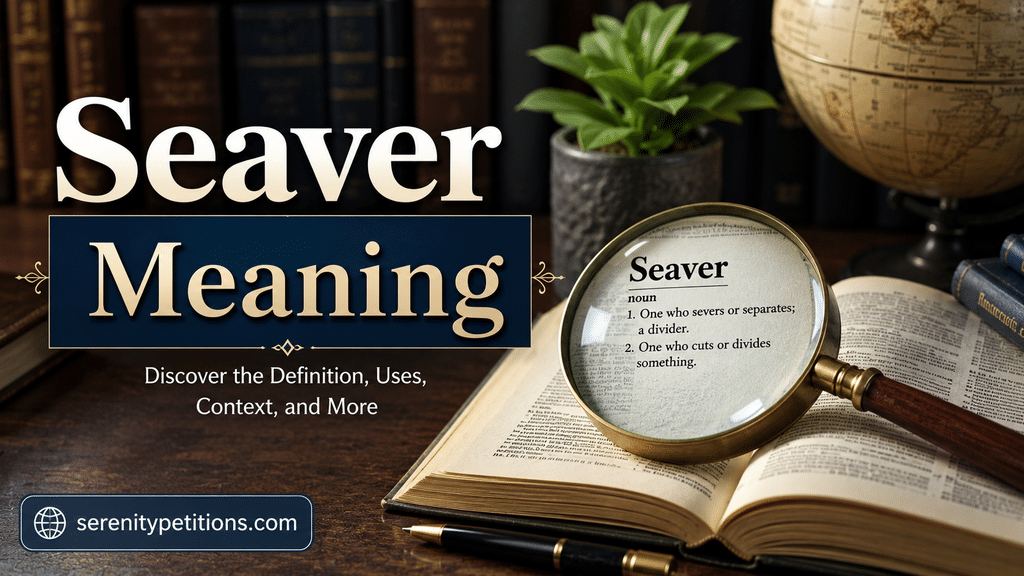
The most common Seaver word meaning is connected to its use as a proper name, particularly a surname. It isn’t normally used like an everyday English adjective, verb, or slang phrase.
Historical surname references trace Seaver to the medieval personal name Sefare and an Old English name associated with “sea” and “journey.” Another documented possibility is an Americanized form of German Seever.
That background matters if you’re researching the Seaver name meaning or family history. However, it doesn’t mean every person named Seaver uses the name with that historical sense in mind.
Person A: “Did you talk to Seaver about the meeting?”
Person B: “Yes, they said they’ll join at two.”
Here, Seaver is being used as someone’s name. Nothing suggests a hidden slang definition.
There isn’t a broadly established internet slang meaning for Seaver. However, the word can serve different naming purposes depending on the situation.
| Possible use | Where you might see it | What it likely identifies |
| Surname | Personal conversations or records | A family name |
| First or personal name | Profiles or introductions | An individual |
| Username | Instagram, TikTok, Discord, gaming | An online account |
| Organization or location | School, business, building, event | A named entity |
| Character name | Fiction or entertainment | A fictional person |
This is why a single definition doesn’t always work. The Seaver meaning by context is often more useful than treating it as slang.
Context gives you important clues about what Seaver refers to. Look at the words around it, the platform where you saw it, and whether it appears with an @ symbol.
For example:
The same spelling can therefore point to completely different entities. You don’t need to invent a slang definition when the sentence already provides the answer.
Usually, the basic Seaver meaning in chat doesn’t change simply because you move between platforms. What changes is how the name is being used.
In a text message, Seaver will usually identify a person the sender expects you to recognize.
Example:
“Can you ask Seaver to call me?”
The sender probably means someone named Seaver. If you don’t know who that is, asking for clarification makes sense.
On Instagram or X, Seaver may appear as a display name, account name, or username.
Example:
“I saw Seaver’s post this morning.”
Here, the word could identify a person or online creator. An @ symbol can make the username interpretation even clearer.
The Seaver meaning on TikTok generally depends on the account or creator using the name. It isn’t a universally recognized TikTok slang abbreviation.
Example:
“Did you see Seaver’s latest video?”
That sentence makes Seaver sound like a creator or account rather than a slang term.
In gaming or Discord chats, Seaver could function as a player name, nickname, or account handle.
Example:
“Seaver joined the lobby.”
In this setting, it most likely identifies another player.
Looking at natural sentences makes the Seaver meaning in conversation much easier to understand.
Alex: “Are you still going with Seaver tonight?”
Jordan: “Yeah, we’re meeting around eight.”
Here, Seaver clearly refers to a person.
Manager: “Seaver reviewed the document.”
Employee: “Great. I’ll make the requested changes.”
The name identifies a colleague or another person involved with the work.
Friend A: “Who is Seaver?”
Friend B: “That’s the creator I told you about.”
In this case, Seaver functions as an online identity.
Seaver itself doesn’t normally communicate an emotion. Unlike words such as “ugh,” “wow,” or certain slang expressions, it doesn’t automatically sound happy, angry, romantic, or insulting.
The emotional tone comes from the surrounding words, punctuation, emojis, and situation.
No. Seaver isn’t inherently rude. It’s generally a name or proper noun.
If someone writes “SEAVER!!!” in an angry message, the tone could feel aggressive. However, that reaction comes from the formatting and context, not from the name itself.
Seaver isn’t normally a flirty expression. If someone uses the word in a romantic conversation, any flirtatious meaning comes from the surrounding message.
For example, “Seaver, you look amazing tonight” has a romantic possibility because of the compliment, not because Seaver itself means something romantic.
Seaver isn’t generally recognized as an offensive slang term. Still, context always matters.
If you’re unsure about a message, examine the complete sentence rather than judging the word alone.
Your response depends on whether you already know who or what Seaver refers to.
If the reference is obvious, answer normally. If it isn’t, a short clarification question can prevent confusion.

If you don’t recognize the reference, don’t guess. Try one of these:
A simple question is usually better than giving the wrong interpretation.
Because Seaver is mainly a proper name, use it when you’re referring to the specific person, account, place, or organization that carries that name.
It may appear naturally in:
If your audience may not recognize the name, add a little context.
For example, “Seaver from our marketing team” is clearer than simply saying “Seaver.”
There’s no need to avoid Seaver simply because it sounds unfamiliar. However, you should avoid using it without explanation when your audience could misunderstand the reference.
This matters particularly in:
Instead of writing “Ask Seaver,” you might write “Ask Jordan Seaver from accounting.” That small detail removes ambiguity.
People searching for the Seaver slang meaning may make a few common assumptions.
| Mistake | Better approach |
| Assuming every unfamiliar word is slang | Check whether it’s a name or proper noun first |
| Searching for a full form | Seaver isn’t a standard acronym |
| Treating it as one fixed definition | Consider the surrounding context |
| Assuming TikTok gives it a special meaning | Check the specific account or community |
| Confusing a username with slang | Look for @ symbols and profile information |
One particularly useful clue is capitalization. “Seaver” begins with a capital letter, which often signals a proper name in standard English.
Seaver can be confused with other words or names because of similar spelling or pronunciation.
| Term | What it generally refers to |
| Seaver | Usually a surname or proper name |
| Seever | A similar surname spelling |
| Sever | An English verb meaning to cut or separate |
| Severe | An adjective meaning very serious or harsh |
| Surname | A family or last name |
| Username | An identifier used for an online account |
| Nickname | An informal name used instead of someone’s usual name |
For example, sever and severe are ordinary English words, while Seaver is commonly encountered as a surname. Similar spelling doesn’t automatically mean the words share the same definition.
The documented history of the surname gives the word more depth than its modern online use might suggest. FamilySearch and Ancestry trace Seaver to the medieval personal name Sefare and an Old English name containing elements interpreted as “sea” and “journey.” They also note that Seaver has been established in Ireland and can sometimes represent an Americanized form of German Seever.
The surname has a long historical record in English-speaking countries. Ancestry’s historical data shows Seaver families in the United States, United Kingdom, Canada, and Scotland during the nineteenth and early twentieth centuries.
This history helps explain why you may encounter Seaver as a family name today. It doesn’t, however, establish Seaver as modern internet slang.
If you’re specifically searching for the Seaver meaning in text, there is no standard abbreviation you need to memorize. In most cases, Seaver is simply identifying someone or something with that name.
The easiest way to interpret it is to inspect the sentence:
This approach is more reliable than assuming every unfamiliar term has a hidden chat definition.
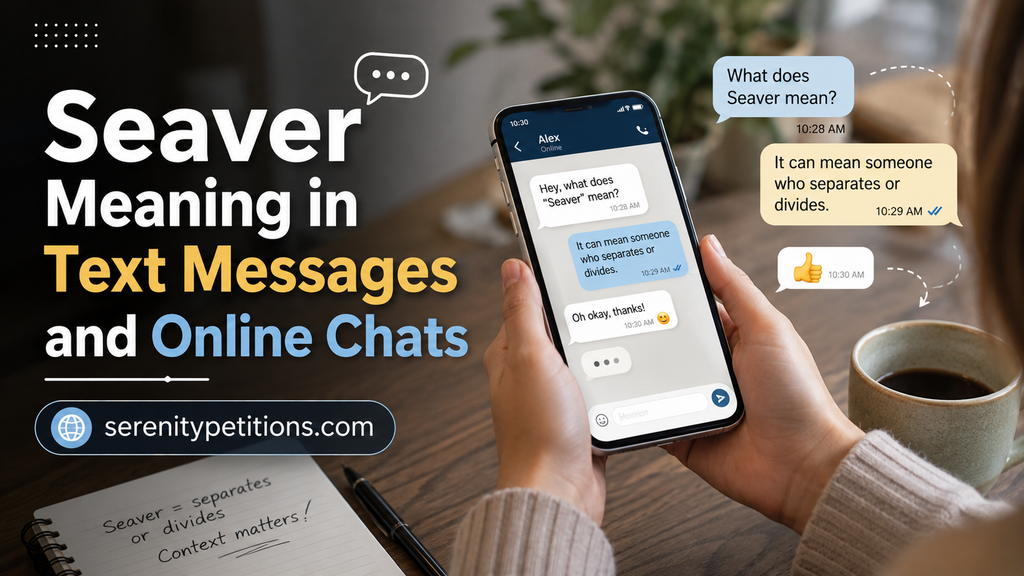
In a text conversation, Seaver most often works like an ordinary name.
Example:
“Seaver said they’ll arrive at 7.”
The sentence tells you that Seaver is probably the person who made the statement. If you don’t know who that is, the sender likely assumes you share that context.
When you’re trying to interpret an unfamiliar name, read the entire message instead of focusing on one word.
Pay attention to:
For example, “Meet me at Seaver after class” sounds very different from “Seaver sent me a message.”
A few quick clues can make interpretation easier:
Person: “I talked to Seaver.”
Username: “@Seaver posted it.”
Location: “The event is at Seaver.”
Organization: “Seaver announced the new program.”
When the sentence still isn’t clear, simply ask what the sender means. There’s no need to guess.
The spelling of Seaver can make it look similar to several other terms. That’s one reason people may search for its definition when they encounter it unexpectedly.
The important distinction is that Seaver is primarily a proper name, while words such as “severe” and “sever” have ordinary dictionary meanings. A similar-looking word doesn’t necessarily share the same origin, function, or usage.
The biggest source of confusion is assuming that an unfamiliar word must be slang.
Online conversations contain usernames, nicknames, surnames, brand names, and place names alongside actual slang. A word can also belong to a small community without having a widely accepted meaning.
So, before assigning a special definition to Seaver, check the sentence and the platform where you found it.
The seaver meaning is generally connected to a surname or proper name, not a standard texting abbreviation.
Keep these points in mind:
In text messages, Seaver meaning usually refers to a person’s name, username, place, or organization rather than recognized internet slang.
No, Seaver isn’t widely recognized as standard slang. It’s primarily encountered as a surname, personal name, or proper noun.
Seaver meaning is an English surname linked to the medieval name Sefare and Old English elements associated with sea and journey.
No established texting full form exists for Seaver. It generally functions as a name rather than an acronym or chat abbreviation.
On TikTok, Seaver meaning may identify a creator, display name, or username. Its meaning depends on the specific profile and conversation.
Yes. Seaver can refer to different people, usernames, places, or organizations, so surrounding context determines the intended reference.
If you know the reference, respond normally; otherwise, ask which Seaver they mean to avoid misunderstanding the conversation.
Understanding the seaver meaning becomes easier when you compare it with other popular text terms. Online language changes quickly, so a word can have different meanings depending on context. The same Seaver meaning applies to terms like solti meaning, dipsy meaning, and yeoh meaning. Each one may appear in casual chats, social posts, or specific communities.
It’s also helpful to know modern texting shortcuts. For example, syfm meaning can depend on the conversation and the speaker’s tone. Likewise, knowing what does ts mean in text can help you understand messages without guessing. Context always matters, especially with short abbreviations.
Overall, learning these Seaver meaning makes online conversations much easier to follow. Meanings can shift over time, but the surrounding words usually provide useful clues. When you see an unfamiliar term, check how it’s being used before assuming its meaning. That simple habit can prevent confusion and help you communicate more confidently online.